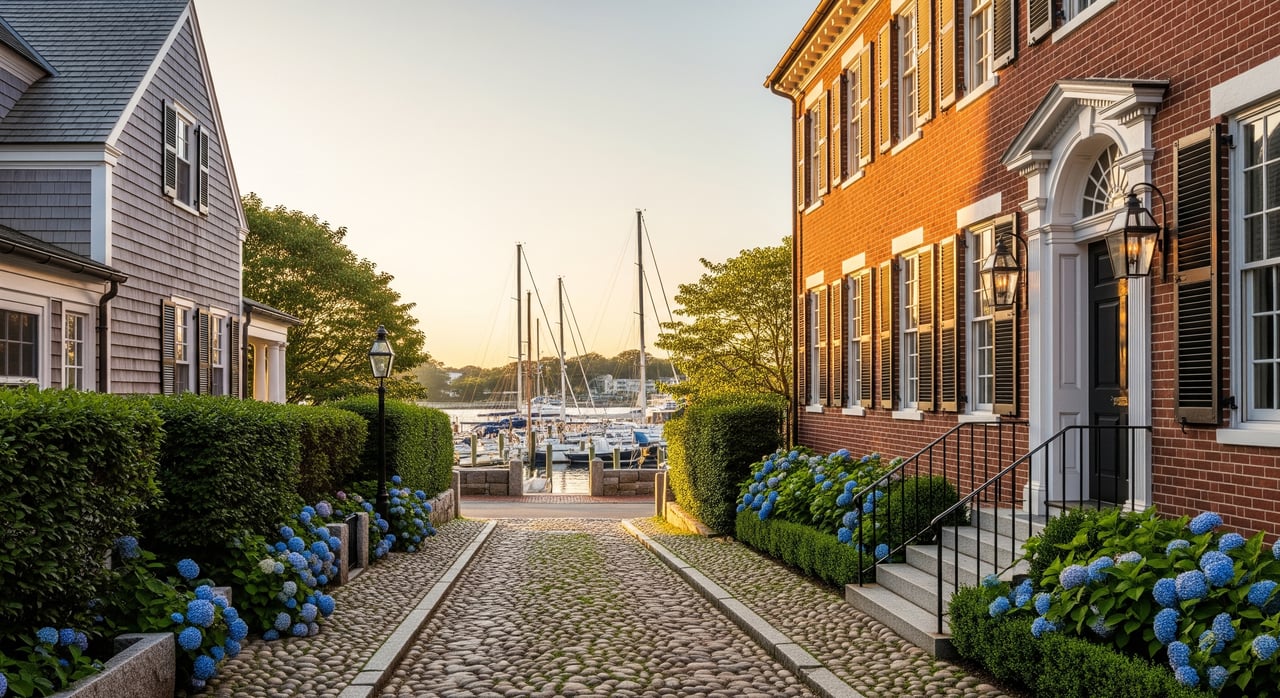
If you love the idea of stepping out your door to cafés, galleries, and the harbor, Newport’s historic core might be your perfect fit. You want walkability and character, but you also want a clear picture of daily life beyond the postcards. In this guide, you’ll learn what the area covers, how it feels season to season, the housing types you’ll find, and the practical tradeoffs to weigh before you move. Let’s dive in.
What the historic core covers
Newport’s historic core centers on Thames Street, Washington Square, and the waterfront around Bowen’s Wharf and Bannister’s Wharf. It includes nearby residential streets like Spring Street and Washington Street, and edges of Bellevue Avenue near the mansions and cultural sites. You are also close to landmarks such as the International Tennis Hall of Fame, Touro Synagogue, Redwood Library, and Fort Adams at the harbor’s edge. Newport is a small city of roughly 25,000 people, and downtown density rises sharply in summer during festivals and sailing events.
Daily rhythm and walkability
The core is very walkable for dining, shopping, marina access, and civic and cultural spots. Biking is common, though some streets are narrow or hilly, so you will want to plan your routes. Public transit through RIPTA connects the island, and seasonal ferries run on varying schedules. Driving to Providence and I‑95 requires bridge and highway travel, and commute times shift with traffic and season.
Housing types you’ll see
You’ll find 18th and 19th century Colonial, Federal, Victorian, and shingle homes, plus mixed‑use buildings with apartments above ground‑floor shops. There are small multifamily homes, condo conversions, and some newer infill. Lots are often narrow with multi‑story buildings and smaller or nontraditional yards. Off‑street parking is limited on many blocks, and older mechanical systems are common.
Renters, owners and STRs
The downtown mix leans more toward rentals than many suburban parts of Aquidneck Island. Seasonal tourism, student and military populations, and multiunit conversions shape the market. Short‑term rentals are common downtown and along the waterfront in summer, which can affect the supply of long‑term options and the feel of some streets. If you plan to rent your property, check the City of Newport for rules on registration, permits, occupancy, and taxes.
Maintenance in salt air
Older coastal homes need consistent care. Expect potential lead paint, older wiring and plumbing, limited insulation, and salt‑air impacts like wood rot and metal corrosion. Efficiency upgrades can be valuable, but exterior changes may be restricted within historic districts. Coordinate with the Newport Historic District Commission early, and ask whether preservation tax credits might apply to qualified rehab work.
Parking, noise and seasonality
Parking can be tight on narrow historic streets, especially in the evening and during summer. Municipal lots, garages, and meters serve the waterfront and commercial areas, and enforcement ramps up in peak season. Summer also brings higher foot traffic, nightlife, and event noise. The city enforces noise and nuisance ordinances, so review the municipal code and visit at different times to see if the vibe fits you.
Safety and awareness
Tourist areas typically see more property crime and opportunistic thefts. As with any city, stay aware of your surroundings and secure bikes and packages. For a detailed view by block, check local police reports and crime maps to inform your decision.
Flood and insurance checks
Some waterfront and low‑lying streets fall within FEMA flood zones. Nuisance tidal flooding can occur in certain areas, and storm surge risk rises in strong coastal events. Lenders may require flood insurance if a property is in a mapped zone. Review FEMA flood maps and local floodplain resources, and ask sellers about past flood events and any related repairs or elevation certificates.
Utilities, code and permits
The city provides water, sewer, and typical municipal services, and schedules for trash and recycling vary by season. Many older buildings have been updated over time, but not all to current code. Verify permitted work and close‑outs with the city, and document electrical capacity, heating and cooling systems, and insulation where possible.
Who this area fits
You will thrive here if you prize walkability, cultural life, dining, and waterfront access. The core suits people who want to live close to daily amenities and do more on foot. If you prefer larger yards and quieter nights, you might look at nearby towns on the island. The key is to match your everyday priorities with the area’s energy, especially in summer.
Buyer and renter checklist
Showings and viewings
- Confirm if the property sits within a historic district and what exterior work requires approval.
- Ask about any short‑term rental history, permits, or active listings.
- Clarify parking arrangements, including permits, assigned spaces, or municipal lot options.
- Ask about recent flood events and any flood‑related repairs or mitigation.
Inspections and condition
- Inspect roofing, flashing, gutters, and chimneys for salt‑air wear.
- Check HVAC age and efficiency, along with insulation and air sealing.
- Review electrical panel capacity and look for older wiring or plumbing materials.
- Look for wood rot, termites, and corrosion on exterior metal components.
- Verify that renovations were properly permitted and closed out with the city.
Financial and ownership
- Use recent comparable sales from the same street or immediate area.
- Review property tax assessments and any special assessments.
- Confirm flood insurance requirements and premiums if applicable.
- Consider potential preservation tax credits for qualifying rehab work.
Lifestyle fit
- Visit on a weekday, a weekend, and in peak season to assess noise and parking.
- Note your proximity to grocery stores, health care, and transit.
- Map your commute times across seasons if you plan to drive off‑island.
How I can help
Buying, selling, or renting in the historic core benefits from granular, block‑by‑block insight. I help clients compare streets, evaluate parking and flood exposure, and plan inspections with the right specialists for older coastal homes. If you own or plan to own an investment property, I can coordinate staging, repairs, cleanouts, tenant placement, and lease management tailored to Newport’s seasonal cycles.
Ready to weigh your options or tour properties that fit your lifestyle and budget? Reach out to Schuyler Horton for a local market consult and a plan that matches your goals.
FAQs
How walkable is Newport’s historic core?
- Most daily needs, dining, cultural sites, and the waterfront are easily reached on foot, though some larger errands may still require a short drive.
What is parking like in downtown Newport?
- Expect limited on‑street parking on many blocks, with municipal lots and metered options nearby; summer brings higher demand and tighter competition.
Are older homes in Newport costly to maintain?
- Often yes, since historic structures and salt air increase upkeep needs; plan for periodic exterior work and system upgrades over time.
Is flooding a concern near the waterfront in Newport?
- Some low‑lying and waterfront areas are in FEMA flood zones; check maps, insurance requirements, and any past flood history for a specific property.
Can I run a short‑term rental in the historic core?
- Possibly, but you must follow City of Newport rules on registration, permits, occupancy, and taxes; verify current ordinances before you buy.
Who is the historic core a good fit for?
- People who value walkability, culture, dining, and waterfront life tend to enjoy it most, while those seeking larger yards often explore nearby towns.