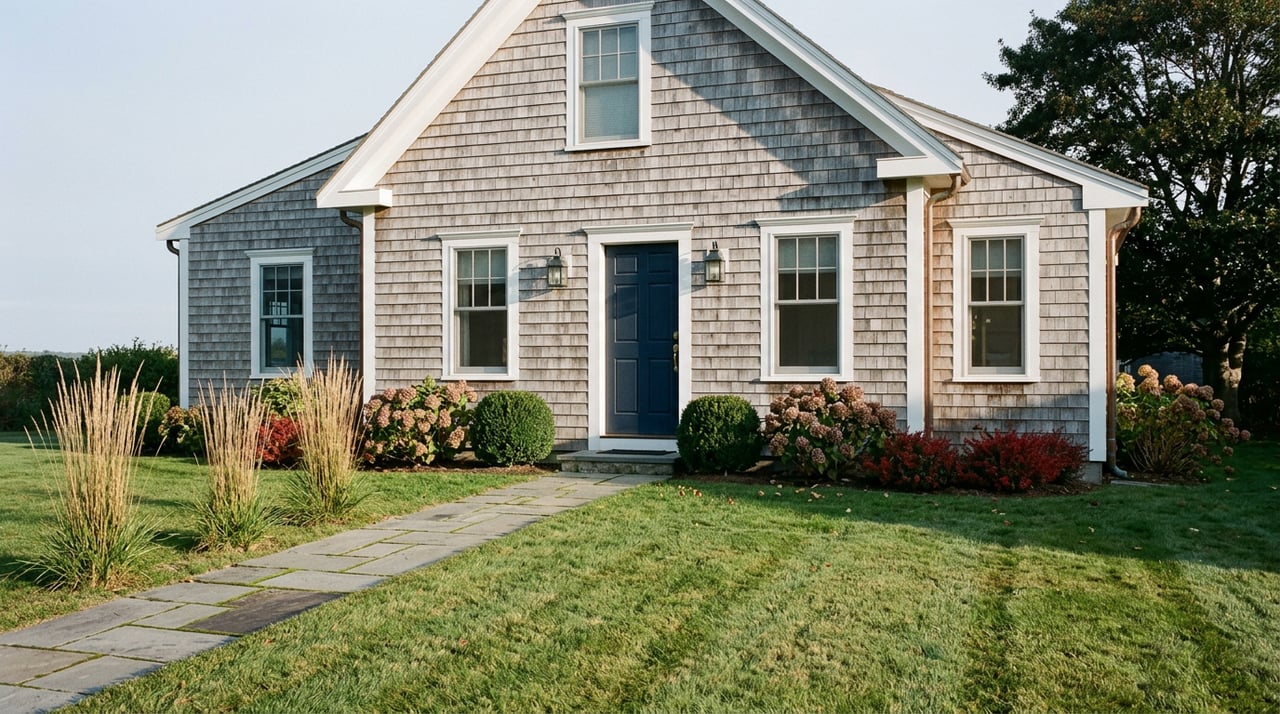
The septic inspection report lands on the table a week before closing, and everyone in the room reads it the same way: this is bad news, and somebody has to fix it. That instinct is correct about the first half and wrong about the second. Rhode Island's Cesspool Act does force a fix. The Rhode Island Department of Environmental Management says the Act does not say who pays for it. In Portsmouth, where a home in Island Park or Portsmouth Park is more likely than not sitting on a system that isn't hooked to municipal sewer, that silence is the actual negotiation.
Most guides to buying or selling a home with a cesspool treat the law as a compliance checklist. Get the inspection, get the report, replace what fails. What they skip is the part that changes leverage at the table: the statute triggers on transfer, gives a full year to comply, and leaves cost allocation entirely open. Layer Portsmouth's own wastewater ordinance on top of that, with its own earlier deadlines for two specific neighborhoods, and you get a timeline that looks simple from a distance and gets complicated the moment you're the one signing.
The Statute Everyone Quotes Half Of
Rhode Island's Cesspool Act applies any time a property with a cesspool changes ownership in an arm's length sale. Once the deed transfers, the new owner has one year to replace the cesspool with a conforming septic system.
Here's the part that actually decides how a Portsmouth deal gets negotiated. The Rhode Island Department of Environmental Management is explicit that the law does not assign responsibility between buyer and seller: it's "subject to negotiation between the buyer and seller." That single sentence is why cesspool disclosures in Island Park and Portsmouth Park turn into price adjustments, closing credits, or pre-listing upgrades depending on which side has more patience for paperwork.
A few transfer types skip the trigger entirely. Transfers into a revocable or irrevocable trust where a first-degree relative is a named beneficiary, transfers between family members, and foreclosures don't start the one-year clock the way a standard sale does. That matters for the estate and second-home clients who make up a meaningful share of buyers in Portsmouth's shoreline neighborhoods, since a transfer that looks like a sale on paper may not carry the same urgency if it's structured as a family transfer first.
Portsmouth Added Its Own Clock On Top
The state law sets the outer boundary. Portsmouth's Wastewater Ordinance, passed by the Town Council on September 21, 2015, layered a stricter local schedule on top of it, and the two neighborhoods with the oldest, densest concentration of shoreline cottages, Island Park and Portsmouth Park, got the earliest deadlines rather than the last ones.
| Milestone | Deadline |
|---|---|
| Wastewater Ordinance adopted by Town Council | September 21, 2015 |
| First maintenance inspections begin, Island Park and Portsmouth Park (priority areas) | Completed by July 1, 2017 |
| First maintenance inspections, town wide | Completed by December 31, 2022 |
| Cesspools or unpermitted systems within 50 feet of a storm drain | Removed by January 2020, or within one year of sale |
| All cesspools in Portsmouth; unpermitted systems in Island Park and Portsmouth Park | Removed by January 1, 2025 |
The full text of the ordinance is on file with the town, and it's worth reading if you own or are buying a property in either priority neighborhood, because it also requires that inspections be filed by a town-approved inspector. Reports from anyone off that list are rejected outright, so lining up the right inspector early is not a formality, it's the difference between a report the town will accept and one it won't.
There's a third layer for anything close to the water. Rhode Island's coastal cesspool rule requires immediate replacement for any cesspool within 200 feet of the inland edge of a shoreline feature bordering tidal water, under the Coastal Resources Management Council's jurisdiction. That deadline passed back in January 2014, which means any cesspool still sitting inside that 200-foot band today is already a violation, not a future one. On the Sakonnet River side of Island Park, where lots regularly sit within that distance of the shoreline, this isn't a hypothetical.
What "No Record" Actually Means On A Shoreline Cottage
Buyers who pull a septic report and see no Certificate of Conformance on file often assume something was hidden. On the older cottages that make up a lot of Island Park's and Common Fence Point's inventory, the more common explanation is simpler: the state's own septic permit records run from 1968 forward, and a cottage built as a seasonal camp before that never generated a permit in the first place. That's not a red flag on its own. It is, however, a reason the inspection has to happen before you assume anything about the system's age or condition, since there's no paper trail to check it against.
The Cost Bands That Decide the Negotiation
The dollar figures are what turn "who pays" from an abstract question into a specific number at the closing table.
- A standard point-of-sale septic inspection in Portsmouth runs $300 to $500, and that's the number most sellers budget for before listing.
- According to Septic Tank Hub, properties inside the Narragansett Bay watershed, which covers a large share of Portsmouth's shoreline, require nitrogen-reducing systems when a cesspool is replaced. That requirement alone adds $8,000 to $15,000 to the job compared with a standard system.
- A full conventional system replacement, per RIDEM's own cost guidance, typically runs $10,000 to $18,000 depending on site conditions.
- Portsmouth homeowners facing that bill aren't without help. The town's Community Septic System Loan Program, administered through Rhode Island Housing, offers up to $30,000 over 10 years at 1 percent interest for cesspool and septic replacement or repair, and it's worth asking about whether you're the one who ends up owning the obligation.
Those numbers are why the negotiation rarely ends with "seller fixes it" or "buyer fixes it" as a clean default. A seller staring down a $15,000 nitrogen-system upgrade has real incentive to offer a credit instead of doing the work themselves before listing, and a buyer who knows the loan program exists has more room to accept that credit than one who assumes the whole cost has to come out of pocket at closing.
A 2025 Reminder That the Deadline Passed, Not the Risk
It would be easy to read that January 1, 2025 removal deadline and assume the Island Park and Portsmouth Park cesspool problem is now closed. RIDEM's own enforcement record from August 2025 says otherwise. That month, the department issued a notice of violation against a single-family residence on Anthony Road in Portsmouth, still served by a cesspool months after the town's own deadline had passed. It's one case, but it's a useful reminder that a calendar date passing doesn't mean every system on it got replaced. Some got fixed. Some got sold with the obligation attached to whoever bought next. Some are still sitting there, waiting for the next transfer or the next inspection notice to surface the issue.
For a buyer, that means a system's compliance status isn't something you can infer from the fact that 2025 has come and gone. It's something you confirm with a current inspection report and a Certificate of Conformance on file with the town, full stop.
What This Means If You're Under Contract Right Now
If you're buying or selling a Portsmouth property served by a cesspool or an older septic system, the questions worth asking before you sign are narrower than "is this going to be a problem." They are:
Is there a Certificate of Conformance on file at Town Hall, and if not, has a town-approved inspector confirmed the system's actual condition. Is the property within 200 feet of a shoreline feature under CRMC jurisdiction, which would mean immediate replacement rather than the standard one-year window. Is the property in the Narragansett Bay watershed, which determines whether a replacement needs to be a nitrogen-reducing system and adds five figures to the job. And finally, has the one-year clock and its cost been addressed explicitly in the purchase agreement, rather than left to an assumption about who's supposed to handle it.
None of this is legal advice, and every deal should have its own attorney reviewing the specific language in the contract. What a local agent can do is flag the mechanism early enough that it's a line item in the negotiation instead of a surprise the week before closing.
A Few Questions Worth Asking Before You Sign
Does the one-year clock apply if I'm buying from a family member or through a trust? Not automatically. The Cesspool Act's trigger is tied to arm's length sales. Transfers to a trust naming a first-degree relative as beneficiary, transfers between family members, and foreclosures are treated differently, so it's worth confirming with your attorney whether your specific transaction qualifies for that exception.
If the seller already installed a new system, what should I verify? Verify that a Certificate of Conformance is on file at Town Hall, since a new system without the paperwork filed can create the same "no record" confusion as an old one.
Is this only relevant if I'm buying in Island Park or Portsmouth Park? Those two neighborhoods had the earliest local deadlines, but the town-wide first maintenance inspection requirement and the state Cesspool Act apply anywhere in Portsmouth with an onsite system, and the CRMC coastal rule applies to any qualifying shoreline lot regardless of neighborhood name.
If you're weighing a purchase or sale in Portsmouth's shoreline neighborhoods and want to talk through what a specific property's septic history actually means for your offer or your asking price, Brenton Reef Realty is a good place to start that conversation. Contact Schuyler for a local market consult before you're staring at an inspection report with a week left before closing.